Most art sits on a wall and looks beautiful. Carbon-sequestering art does something more. It pulls carbon out of the atmosphere, permanently, and locks it inside the artwork itself. What hangs on your wall isn’t just a painting. It’s a physical act of climate intervention.
But what exactly is carbon-sequestering art? How does it work? And why are climate-conscious collectors, Fortune 500 sustainability leaders, and contemporary art curators paying close attention to this emerging movement?
The science of carbon sequestration, explained simply
Carbon sequestration is the process of capturing carbon dioxide from the atmosphere and storing it so it cannot re-enter and contribute to global warming. Nature does this constantly. Trees absorb CO₂ and store it in their wood and roots. Oceans absorb it into their waters. Soil stores it through organic matter.
The challenge is permanence. A tree can burn. A forest can be cleared. When that happens, all the stored carbon returns to the atmosphere in hours. The world needs carbon storage that is stable over decades and centuries, not just years.
This is where biochar enters the conversation.
What is biochar, and why does it matter for art?
Biochar is produced by heating organic material (agricultural waste, wood chips, crop residue) in a low-oxygen environment. This process, called pyrolysis, converts the organic matter into a highly stable, carbon-rich char. Unlike a tree or a crop, biochar does not decompose quickly. The carbon locked inside it is effectively removed from the carbon cycle for hundreds to thousands of years.
Biochar has deep roots in agricultural history. Ancient Amazonian civilizations used it to build extraordinarily fertile soil, a practice so effective that the land is still measurably richer than surrounding areas today, centuries later. Modern regenerative farmers are rediscovering it as a tool for improving soil structure, water retention, and crop yields while simultaneously sequestering carbon.
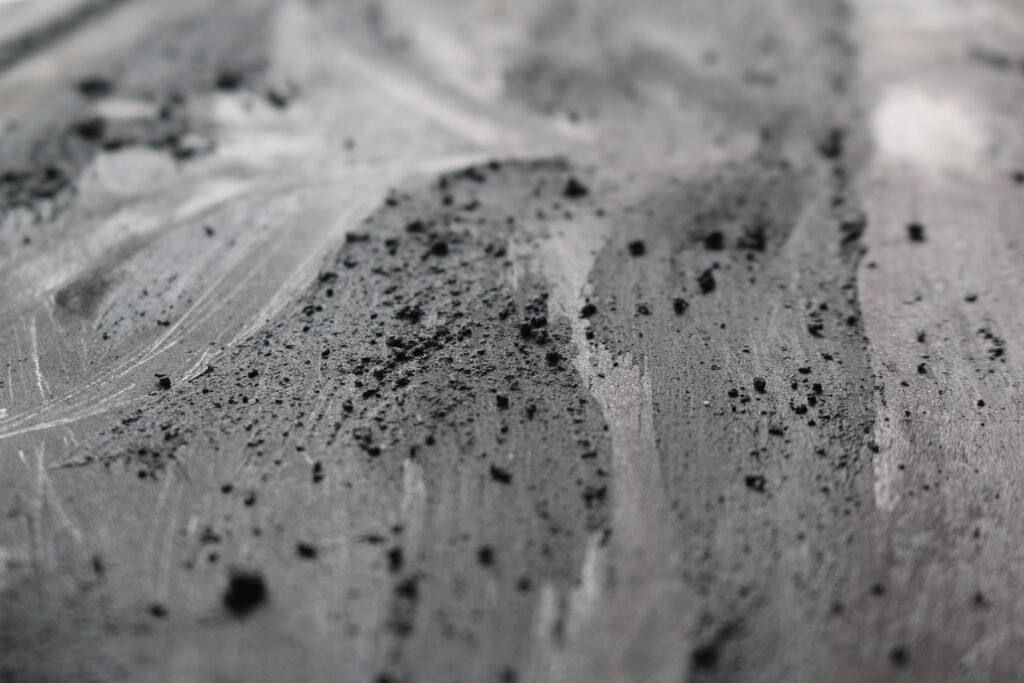
What makes biochar remarkable for artists is that it is not just a soil amendment. It is also a drawing material. Ground finely, it produces a rich, velvety black that responds to paper with the same depth and texture as traditional charcoal. The difference is that the carbon it contains is already sequestered. It has already been removed from the atmosphere. And when it is fixed into an artwork, bound by fixative, framed under glass and preserved as a collector’s piece, it stays sequestered.
How an artwork can physically store carbon?
Traditional charcoal, the kind artists have used for centuries, is produced in a similar way to biochar. Both come from burning organic material in conditions with limited oxygen. Both are largely composed of stable carbon. The difference lies in the source material, the process and the intent.
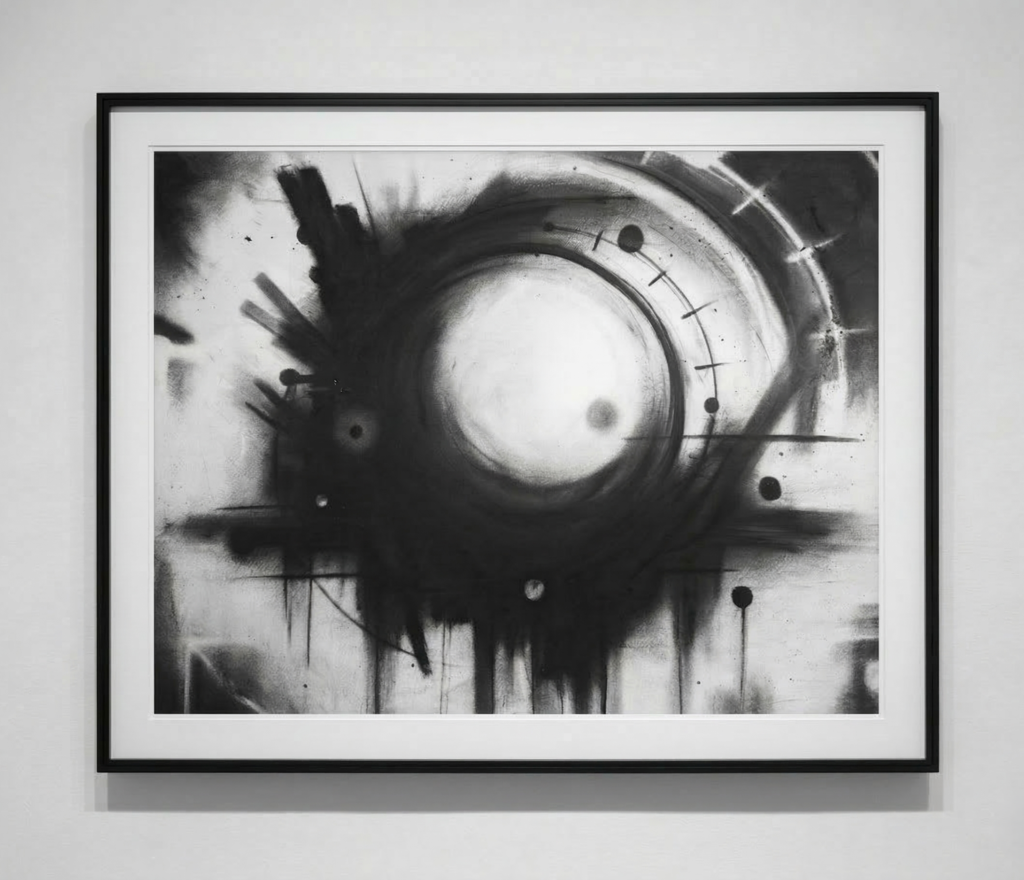
Carbon-sequestering art uses charcoal and biochar not just as a medium but as a material choice with environmental intention. When biochar is applied to a surface and fixed permanently, the carbon it contains cannot escape back into the atmosphere. It is, quite literally, stored in the piece on your wall.
This is not a metaphor. It is chemistry.
A single artwork made primarily with biochar and charcoal contains meaningful, if modest, amounts of sequestered carbon. More significantly, it represents a philosophy: that the materials we create with can be part of the solution to the climate crisis, not merely neutral to it.
Carbon-sequestering art vs. carbon offsets: what is the difference?
Carbon offsets are financial instruments. You pay a company to plant trees, protect a forest, or fund a renewable energy project somewhere in the world. The carbon savings are estimated, verified by a third party, and reported as a credit against your own emissions. Offsets can be powerful tools when done well, but they are intangible. You cannot hold one or display one. Their long-term permanence depends on factors beyond your control.
Carbon-sequestering art is different in a fundamental way: the sequestration is physical and immediate. It is already done. The biochar in the artwork has already captured carbon. No future tree needs to survive a wildfire. No forest needs to remain uncleared. The carbon is in the piece: stable, permanent and documented.
Many carbon-sequestering artworks also bundle verified offsets as an additional layer of impact, supporting regenerative farming, soil restoration, or nature-based projects that extend the environmental contribution of each purchase beyond the artwork itself. This combination of physical sequestration and verified additional impact is what distinguishes the most serious works in this category.
Why is carbon-sequestering art growing in relevance?
Three forces are converging to make carbon-sequestering art one of the most significant emerging categories in contemporary collecting.
The ESG imperative in corporate collecting
Corporations with sustainability commitments are increasingly scrutinising where they spend. Art for offices, lobbies, and boardrooms is no exception. A piece that comes with verified carbon sequestration documentation, a Certificate of Impact, and a story rooted in genuine climate science is a fundamentally different kind of acquisition from a decorative print. It contributes to ESG reporting. It communicates values to employees and clients. It is art that does something real.
The rise of the conscious collector
Private collectors are asking harder questions about what they buy and what it means. The era of collecting as pure status display is giving way to collecting as an expression of values. For climate-aware collectors, and their numbers are growing rapidly, the ability to say “this piece is made from materials that have permanently stored carbon and funded regenerative farming in Kenya and India” is not a footnote. It is central to why they chose it.
The authenticity gap in sustainable art
Many artists call their work “sustainable”, meaning they use recycled canvas, non-toxic paints, or ship with minimal packaging. These are worthy choices. But carbon-sequestering art makes a stronger claim: it does not just reduce harm, it actively reverses it. That distinction matters to buyers who have grown sophisticated about greenwashing and who demand evidence, not intention.
What makes carbon-sequestering art verifiable?
The word “verified” is doing important work in this category. Not all claims are equal. When evaluating a carbon-sequestering artwork, look for:
- Documentation of materials, what percentage of the medium is biochar or charcoal? From what source? Processed how?
- A certificate of environmental impact, a document specific to the piece, not a generic sustainability statement
- Third-party verification, has the associated offset or farming impact been independently verified?
- Artist credentials, does the artist have expertise in both the science and the art? Are they embedded in climate and sustainability communities, or is this a marketing layer on conventional work?
- Transparency about limits, honest artists will tell you exactly how much carbon is in a piece and exactly what the associated offset funds. Vague claims of “climate positive” without specifics are a warning sign.
The Carbon Art: carbon-sequestering fine art with verified impact
The Carbon Art was founded on a single conviction: that art should not merely witness the climate crisis, it should act. Every work is made with biochar and charcoal, materials that permanently store carbon captured from the atmosphere. Every purchase funds verified biochar compost delivery to regenerative farmers in Kenya and India, improving soil health, increasing crop yields by approximately 15%, and restoring agricultural land acre by acre. Every piece ships with a Certificate of Impact that documents exactly what your acquisition has contributed.
The artist behind The Carbon Art, Abhijeet Shrivastava (Abhi), is a White House-recognised climate artist, Columbia University GSAPP graduate, and sustainability strategist who advises Fortune 500 institutions on climate resilience. The art and the work are inseparable. The scientific rigour that informs his corporate consulting is the same rigour applied to every drawing.
The works are limited editions, a maximum of 15 per piece. Once they are gone, they are gone. This is not a print-on-demand sustainability brand. It is a serious fine art practice with a serious climate commitment.
Frequently asked questions
Is carbon-sequestering art a real category or just a marketing term?
It is a real category grounded in material science. Biochar and charcoal are genuinely stable, carbon-rich materials. Fixing them into an artwork does permanently store that carbon. The question is not whether the mechanism is real, it is, but whether any given artist or brand is implementing it honestly and transparently. Look for documentation, third-party verification, and artist credentials before buying.
How much carbon does a single artwork sequester?
This varies by piece, size, and the proportion of biochar used in the medium. A typical work made predominantly with biochar and charcoal contains several hundred grams to a few kilograms of sequestered carbon. On its own, this is modest, but combined with verified farming offsets bundled with each purchase, the total environmental contribution is considerably larger and fully documented.
Can I use a carbon-sequestering artwork purchase in my company’s ESG reporting?
Yes, if the purchase comes with verified documentation. The Carbon Art provides each buyer with a Certificate of Impact that records the specific environmental contribution of their piece, including biochar delivered to farms, acres of soil restored, and associated carbon sequestration. This documentation has been used by corporate collectors in their CSR and ESG annual reports.
Is carbon-sequestering art a good investment?
Limited edition works by credentialled artists in an emerging category with genuine differentiation have historically performed well as the category gains mainstream recognition. Carbon-sequestering art sits at the intersection of two growing markets, fine art collecting and climate action, with a story that is difficult to replicate. Beyond financial value, each piece is a permanent record of environmental commitment, and that record does not depreciate.
Where can I buy carbon-sequestering art?
The Carbon Art offers a growing collection of limited edition charcoal and biochar artworks available directly at thecarbonart.com. Each piece is available in a maximum edition of 15, ships with full impact documentation, and is created by a White House-recognised climate artist. Corporate commissions and private collector consultations are available through the inquiry page.
Art that acts
Carbon-sequestering art is not a trend or a label. It is a material choice, a scientific reality, and a philosophical position about what art can and should do in a time of climate crisis. The best works in this category are beautiful, rigorously made, and honestly documented. They ask something of the collector, not sacrifice, but intention. Not charity, but alignment.
If you are ready to collect art that does more than hang on a wall, explore the current collection at The Carbon Art, and ask for the Certificate of Impact before you decide.