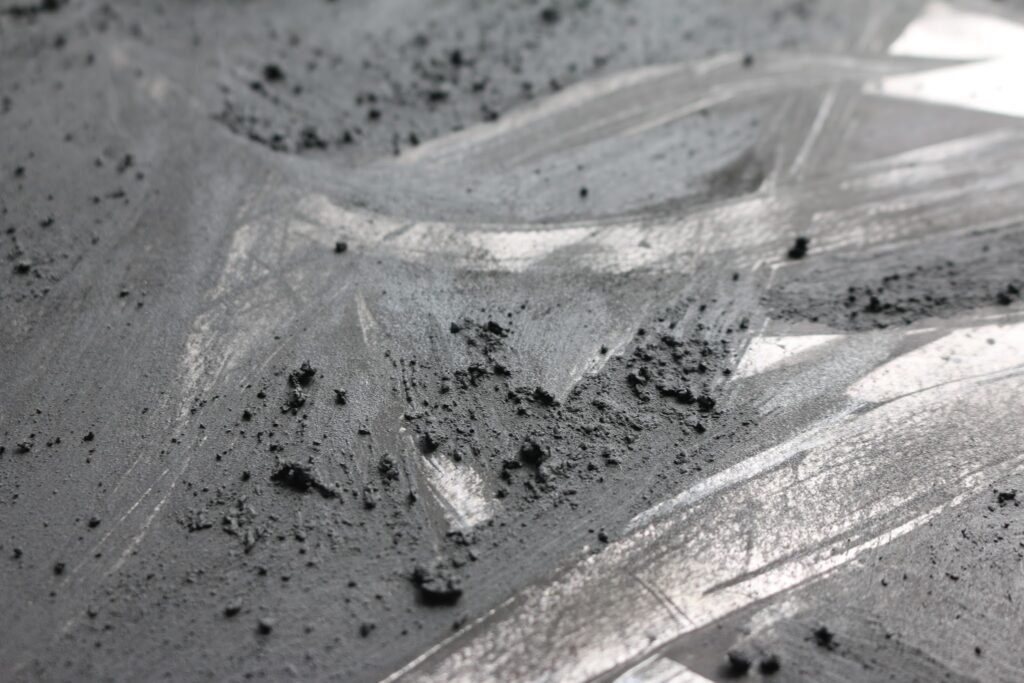
Most art is made with pigment, canvas, or light. This work is made with carbon that has been permanently removed from the atmosphere — and locked inside the artwork itself.
Carbon is a story about time
Trees are extraordinary. Over decades, they draw carbon dioxide out of the air and lock it into their wood through photosynthesis. But when a tree dies — or when we burn wood for fuel — most of that carbon goes right back into the atmosphere within years or decades.
Biochar changes that timeline entirely.
When organic material — agricultural waste, wood chips, coconut shells — is heated in a low-oxygen environment through a process called pyrolysis, something remarkable happens. The carbon doesn’t combust. Instead, it transforms. The volatile compounds burn away, but the carbon skeleton crystallizes into a stable, porous structure that is chemically resistant to decomposition.
The result is a dense, dark material that looks like fine charcoal. It is, at its core, a molecular archive — carbon atoms locked into a lattice that resists biological breakdown. Soil microbes cannot meaningfully consume it. Rain cannot wash it away. Time, on a human scale, barely touches it.
Scientists estimate that biochar retains its carbon content for between 1,000 and 3,000 years under typical environmental conditions — compared to roughly 5–10 years for unprocessed organic matter left to decompose.
“The carbon in this artwork was already removed from the atmosphere before the piece was ever made. It is not a promise. It is already done.”
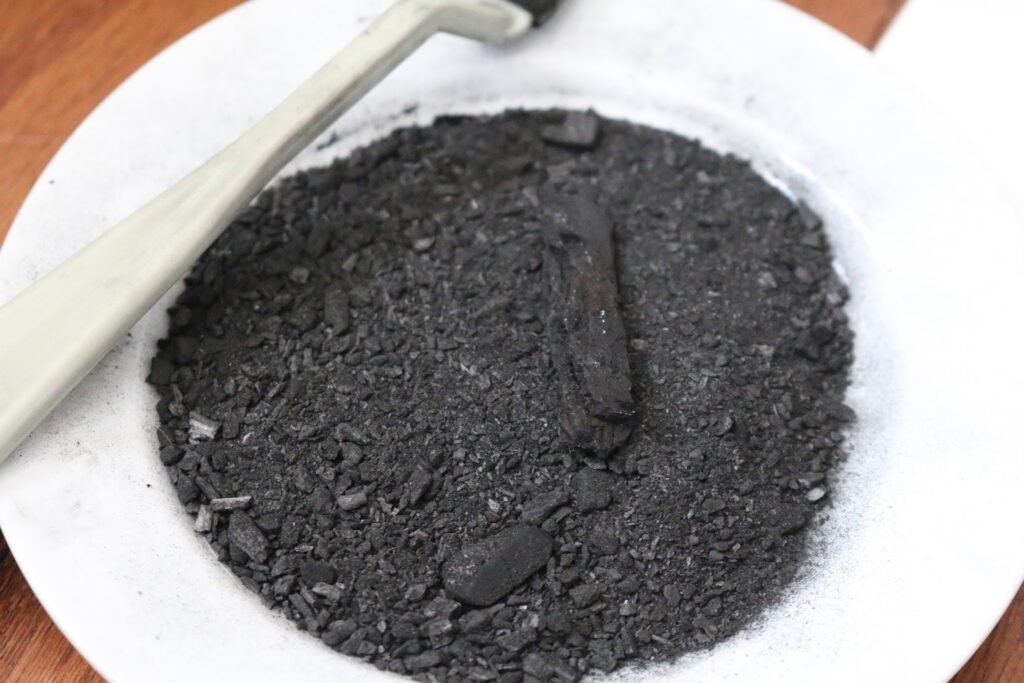
Currently available at the studio.
From atmospheric CO₂ to permanent artwork
01 · Carbon enters the plant Biomass — agricultural residues, coconut husks, wood waste from Kenya, India, and Iceland — absorbs CO₂ from the air as it grows. Photosynthesis stores that carbon in organic matter.
02 · Pyrolysis transforms it Heated in a closed, oxygen-limited kiln, the organic material undergoes pyrolysis. Hydrogen and oxygen are driven off as gas. What remains is a carbon-rich skeleton — stable, porous, and dark.
03 · The medium is sourced The Carbon Art sources verified biochar from partner networks with transparent chain-of-custody documentation. The carbon mass embedded in each artwork is quantified and certified.
04 · The artwork is the vessel Biochar is blended into drawing media and worked directly onto archival surfaces using traditional charcoal techniques. The artwork is the sequestration vessel. Collection is custody.
Goods for the home, by our artisans.
The canvas holds what the atmosphere no longer does
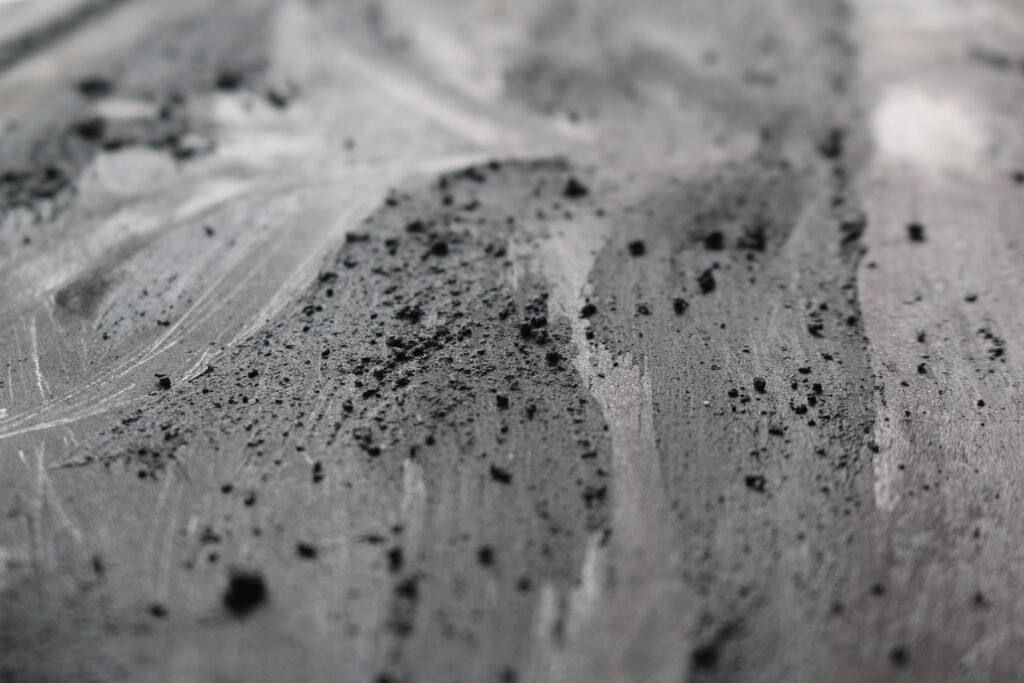
The formal language of The Carbon Art is monochromatic — pure black, gradients of grey, the deep texture of carbon on archival paper. It is deliberately stark. The palette is not an aesthetic choice alone. It is an honest one: the work is made from carbon, and carbon is black.
Each drawing begins not with a sketch but with material decisions. How much biochar is in this piece? From which source? What does its origin — geothermal biomass from Iceland, agricultural waste from rural Kenya — bring to the surface, literally and conceptually?
Working with biochar as a drawing medium is demanding. It does not behave like artist-grade charcoal. It is coarser, more unpredictable, more mineral than vegetal. The resistance of the material becomes part of the image — marks that record both the gesture of the hand and the history of the molecule.
What emerges is an artwork that carries a verifiable environmental claim — not as a tag or a label, but as a physical fact embedded in its surface. To own it is to hold the carbon. To display it is to demonstrate that removal.
Environmental Impact
Each work ships with a Certificate of Impact documenting the carbon mass embedded in the piece, its biochar source and origin, and the estimated permanence window. Suitable for ESG reporting, sustainability disclosures, and institutional acquisitions.
→ Explore the Impact Framework
Collect
Original works and limited edition prints are available in multiple formats. Each purchase transfers custody of sequestered carbon that has already been permanently removed from the atmosphere. The artwork is the sequestration. Collection is stewardship..
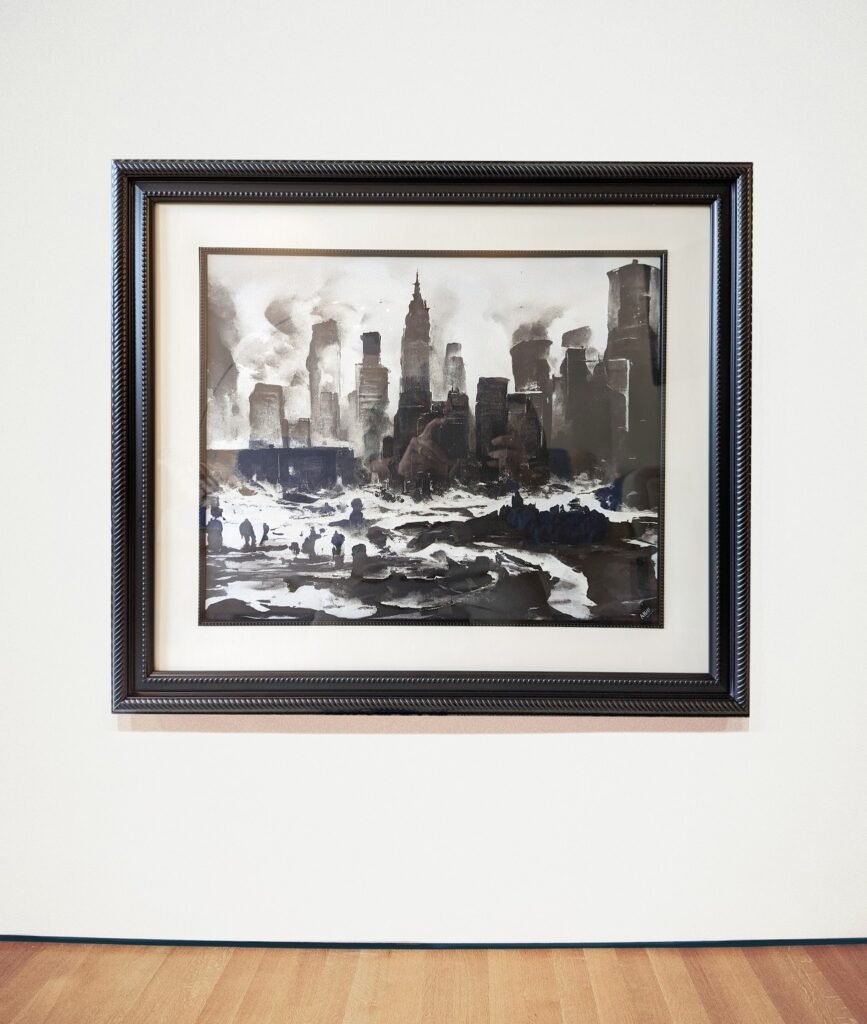
→ View the Sequestered Cycles Collection
Biochar permanence data is drawn from peer-reviewed literature including Lehmann et al. (2015) and the International Biochar Initiative. Source verification and chain-of-custody documentation is available upon request for all institutional acquisitions. Learn more on our Impact page.
Let’s create something beautiful together.
Share & follow
Where to find biochar art
The Carbon Art is one of the few fine art practices in the world built entirely around biochar and charcoal as primary media. Every piece in the collection is made with carbon-sequestering materials and ships with a verified Certificate of Climate Impact. Limited editions of 15 per work. Explore the full collection here or get in touch for collector and corporate inquiries.