On February 3, 2026, the European Commission did something that has not happened before in the history of carbon policy.
It formally adopted biochar as one of only three recognized permanent carbon removal pathways under the world’s first voluntary standard for certifying carbon removals: the Carbon Removals and Carbon Farming Regulation, known as CRCF.
The other two pathways were Direct Air Capture with Carbon Storage and Biogenic Carbon Capture and Storage. Both require industrial infrastructure worth hundreds of millions of dollars.
Biochar required a kiln and organic material.
That is the moment I want to talk about. Not because it validates the work retroactively, though it does. But because it changes what the work means going forward, and what it means for anyone who owns it.
What the CRCF actually is
The Carbon Removals and Carbon Farming Regulation (Regulation EU 2024/3012) is the EU’s first unified framework for certifying activities that permanently remove CO2 from the atmosphere. It entered into force in December 2024. The first certification methodologies were adopted on February 3, 2026.
It is a voluntary framework, but that word undersells what it does. Voluntary means companies are not legally required to participate. It does not mean the standards are soft. The CRCF sets legally grounded rules for:
- How a tonne of removal is measured and quantified
- What counts as permanent storage and for how long
- How risks like leakage and reversal are managed
- What third-party verification is required
- How certified units can be used within EU climate strategy
This is the difference between a marketing claim and a regulatory fact. The CRCF turns biochar carbon removal from something producers claim into something the European Union certifies.
Why biochar was chosen alongside DACCS and BECCS
The three pathways selected for the first CRCF methodology round were not chosen randomly. The Commission chose technologies it described as “very mature” in terms of scientific evidence and real-world deployment.
Biochar Carbon Removal (BCR) was selected because the evidence base is strong. When organic material is heated in low-oxygen conditions through pyrolysis, the result is a stable, carbon-dense solid. The carbon does not return to the atmosphere through decomposition. Studies consistently show mean residence times of hundreds to thousands of years depending on feedstock and production conditions.
The CRCF methodology for biochar covers exactly what the work at The Carbon Art is built on: documented feedstock sourcing, pyrolysis conditions, carbon content measurement, and chain of custody. The verification frameworks already in use here, Puro.earth and the Verified Carbon Standard, are among the certification schemes that can apply for formal CRCF recognition. What was already verified is now positioned directly within the EU’s regulatory framework.
What this means if you own one of these works
The biochar in a work from The Carbon Art did not change on February 3, 2026. The carbon sequestered in it has been there since before the piece was made. The certificate that comes with each work documented it.
What changed is the institutional context around it.
Biochar carbon removal is no longer a practice that requires explanation to auditors, ESG teams, or procurement officers. It now sits inside the same regulatory framework as the most advanced carbon removal technologies in the world. The certificate that accompanies each artwork references standards that are now formally recognized by the European Commission.
For collectors who hold these works as part of a broader sustainability commitment, that recognition matters. For corporate buyers who cite the works in CSRD disclosures, CDP submissions, or GRI reports, the CRCF alignment adds a layer of regulatory credibility that was not available twelve months ago.
The larger shift: from voluntary market to regulatory infrastructure
The carbon removal market has had a credibility problem for years. Credits were self-reported. Methodologies varied. Greenwashing was common and enforcement was limited.
The CRCF addresses this directly. It does not replace the voluntary market. It builds a regulatory layer above it, giving buyers a government-backed quality benchmark for the first time. Existing standards like Puro.earth and Verra can apply for CRCF recognition, which means the credits they certify could carry EU endorsement alongside their own verification.
Two additional sets of CRCF methodologies are expected later in 2026: one covering carbon farming practices including agroforestry and peatland rewetting, and one covering carbon storage in bio-based construction materials. The Commission is also developing an EU Buyers’ Club to connect certified removal projects with institutional buyers.
The market for verified permanent removals is not a future possibility. It is being built right now, with regulatory architecture, and biochar is one of its three founding pillars.
What this means for material culture
There is a question underneath all of this that the regulatory documents do not address.
What does it mean when a material used in creative work is formally recognized as permanent carbon removal infrastructure?
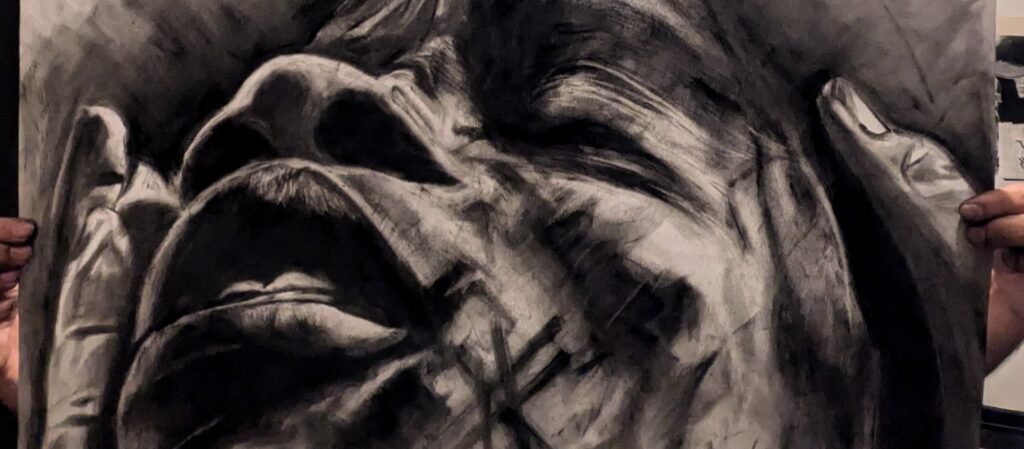
I have been thinking about this since February. The answer I keep arriving at is that it changes the category the work belongs to. Not the aesthetic category. The work is still drawing. Still charcoal on paper, still biochar on linen, still the result of decisions made in a studio about line, tone, and surface.
But the material is now legally recognized as something that belongs to climate infrastructure. The same substance that the EU certifies as permanent removal is what I apply to a surface, measure, document, and send out into the world with a certificate.
That is a different kind of art object than the field has had before. Not because I say so. Because the European Commission says so, in Regulation EU 2024/3012, adopted February 3, 2026.
Frequently asked questions
What is the EU CRCF and how does it relate to biochar?
The CRCF (Carbon Removals and Carbon Farming Regulation) is the EU’s first framework for certifying activities that permanently remove CO2. On February 3, 2026, it formally adopted Biochar Carbon Removal (BCR) as one of only three recognized permanent removal pathways, alongside Direct Air Capture and Biogenic Carbon Capture and Storage. The methodology defines how biochar removals are measured, verified, and certified under EU law.
Does CRCF certification make biochar artwork more credible for ESG reporting?
Yes. Works from The Carbon Art are verified against Puro.earth and VCS standards, both of which can apply for CRCF recognition. This means the carbon removal documented in each certificate aligns with the EU’s regulatory benchmark for permanence and verification. For CSRD, CDP, and GRI disclosures, this adds meaningful institutional weight to the documentation.
How long does biochar store carbon?
CRCF methodology is based on the established science that biochar stores carbon for hundreds to thousands of years depending on feedstock and production temperature. This is what distinguishes biochar from other organic carbon storage methods, where decomposition returns carbon to the atmosphere within years or decades. The permanence requirement in CRCF reflects this distinction.
Can the biochar in an artwork be considered certified carbon removal?
The biochar in each work from The Carbon Art is sourced from verified producers and its carbon content is measured and documented. The verification frameworks used, Puro.earth and VCS, are positioned to seek CRCF recognition. While the artwork itself is not an industrial carbon removal project, the material it contains meets the scientific and verification standards that the CRCF methodology is built on.
What comes next under CRCF in 2026?
Two additional sets of methodologies are expected: one covering carbon farming (agroforestry, peatland rewetting, afforestation) and one covering carbon storage in bio-based construction materials. The first certified CRCF units are expected in late 2026 or 2027 once certification schemes complete the recognition process with the Commission.
The work in the current collection uses biochar sourced from Iceland, Kenya, and India, with carbon content verified against the same standards the EU has now built its framework around. Each piece is available with full documentation at thecarbonart.com/shop.
The material was always permanent. Now there is a regulation that says so.