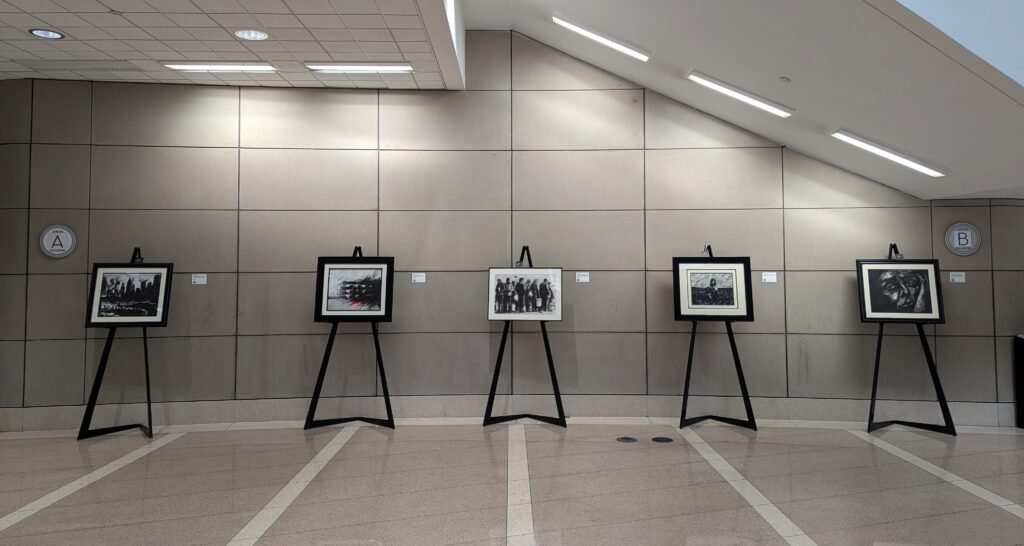
At The Carbon Art, the medium is the message. Each limited-edition work by Abhijeet Shrivastava is created using charcoal, biochar, or a combination of both, sometimes alongside mixed-media elements, with biochar serving as the defining material that connects the work to documented carbon removal. The art is not simply climate-themed. In works where biochar is present, the carbon has been physically removed from the atmosphere and transformed into pigment, mark, and form.
What Is Biochar Art?
Biochar art is an emerging category of fine art in which biochar, a stable carbon-rich material produced by heating organic matter in a low-oxygen environment through a process called pyrolysis, is used as a primary or significant medium. The result is a charcoal-like substance that locks atmospheric carbon into a solid form for hundreds to thousands of years.
Abhijeet’s practice spans pure charcoal works, biochar-based drawings and paintings, and mixed-media compositions that combine both. What unites them is a commitment to material honesty: the carbon content of each work is documented, and where biochar is used, that carbon has been permanently sequestered from the atmosphere.
Charcoal, Biochar, and Mixed Media: What Is the Difference?
Traditional charcoal has been a fine art medium for centuries. It is produced by burning wood in a low-oxygen environment, resulting in a carbon-rich drawing material prized for its depth and range. Biochar undergoes a similar process, pyrolysis, but is derived from agricultural or organic waste and is specifically engineered for carbon stability. Where charcoal is primarily an art material, biochar is simultaneously an art material and a climate tool.
Works in the collection vary in their composition. Some are executed entirely in charcoal, drawing on a deep fine art tradition. Others incorporate biochar as pigment, ground, or structural element. Many combine both, along with other mixed-media components. Each work’s material composition is documented individually. The carbon content is a function of what is in the piece, not a blanket claim applied across the collection.
How Biochar Sequesters Carbon
When organic matter decomposes naturally, it releases CO2 back into the atmosphere. Pyrolysis short-circuits this cycle: the carbon is converted into a stable crystalline structure that resists biological decomposition. Scientific studies estimate biochar remains stable in soil or solid form for over 1,000 years, making it one of the most durable carbon sequestration methods available.
Unlike carbon offsets, which represent a promise of future carbon reduction, biochar represents carbon that has already been removed and permanently stabilised. This distinction matters for ESG reporting, Scope 3 emissions accounting, and climate investment frameworks that require permanence and verifiability.
Why Fine Art and Carbon Removal Belong Together
Art that engages with climate tends to do so through subject matter: paintings of glaciers, photographs of flooded coastlines, sculptures assembled from waste. The Carbon Art takes a different position. The climate action is in the material itself, not the image. A charcoal work carries the weight of a centuries-old tradition. A biochar work carries that tradition and the carbon.
Abhijeet’s training at Columbia University’s Graduate School of Architecture, Planning and Preservation (GSAPP) informs this thinking. The built environment, materials, and their ecological consequences are not separate from design. They are design. The same principle applies to fine art: what a work is made from is inseparable from what it means.
Why ESG Collectors and Corporations Are Acquiring This Work
For sustainability-focused corporations, works that incorporate biochar offer something no traditional acquisition can: a tangible, permanent, and displayable object with documented carbon removal. As ESG frameworks mature and greenwashing scrutiny intensifies, acquiring art that contains sequestered carbon provides both aesthetic value and credible climate action documentation.
Private collectors drawn to this body of work are typically motivated by the convergence of rarity and purpose. These are limited-edition works, not prints, not mass-produced objects, created at the intersection of artistic mastery, material history, and climate science.
Explore our corporate ESG art acquisition programme or browse the full limited-edition artwork collection.
The Artist: Abhijeet Shrivastava
Abhijeet Shrivastava is the founder of The Carbon Art. Trained at Columbia GSAPP and recognised by the White House for his climate art work, he has developed a practice that treats carbon, in charcoal, in biochar, and in the spaces between, as both medium and argument. His works are in private collections and have been exhibited internationally.