Climate Art Exhibitions: A Decade of Showing Carbon as a Medium
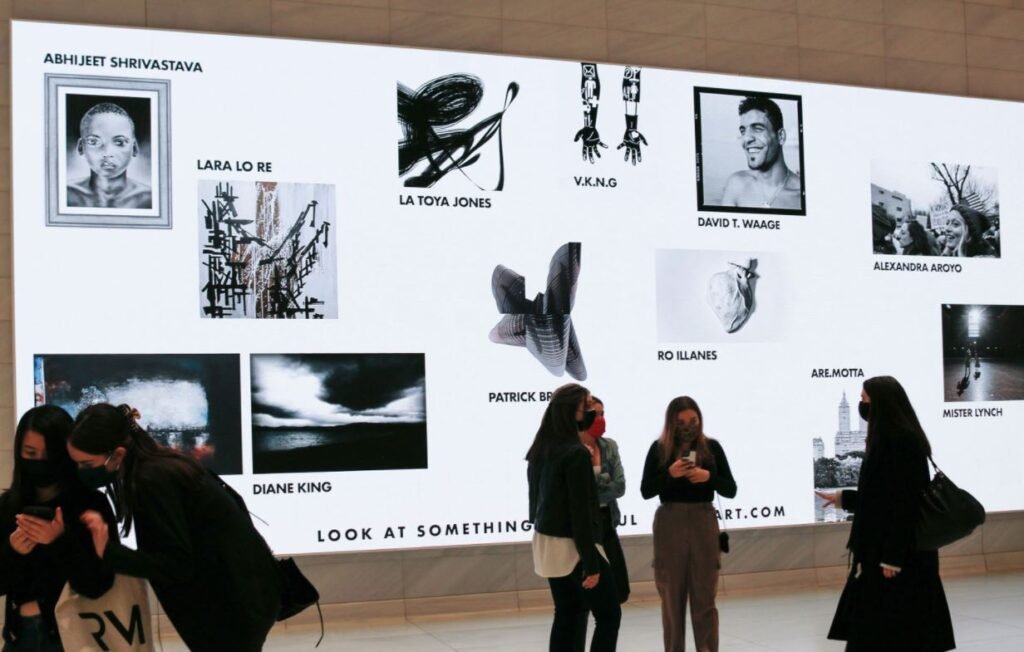
I’ve been making art with charcoal for over thirteen years. For most of that time the work was about climate. But the material itself wasn’t doing anything about it. That changed when I started working with biochar. Biochar is carbon that was pulled from the atmosphere, transformed through heat, and locked into a stable form that won’t release for hundreds of years. When I started embedding it into my work, the artwork stopped being a symbol of climate action and became one. That distinction has shaped every exhibition since. This is a record of where the work has been shown, what those shows meant, and what I’ve learned about talking about carbon in rooms that aren’t used to it. The Oculus, New York City Showing at the Oculus, the Westfield World Trade Center atrium, was the first time the work reached a genuinely public audience. Not a gallery audience that came prepared to engage with art. Commuters, tourists, office workers, people who weren’t expecting to stop. What I noticed: the charcoal drawings stopped people in a way that color work doesn’t. There’s something about monochrome that forces you to look harder. And when people learned the medium was biochar, carbon pulled from the atmosphere and physically embedded in the piece, the conversation changed completely. It stopped being about aesthetics and became about material reality. That’s the conversation I’ve been chasing ever since. MvVO Art Gallery, New York MvVO gave the work its first proper gallery context, a curated space where collectors and institutions come specifically to engage with contemporary art. It was here that I started to understand who the real audience for this work is. It’s not just environmentalists. It’s people who collect seriously and want their collection to mean something beyond the wall it hangs on. Corporate buyers whose organizations have made sustainability commitments and want physical proof of that commitment, not just a donation receipt. And individual collectors who’ve been following climate science long enough to be past the point of symbolic gestures. The biochar work speaks to all of them differently, but it speaks. Saatchi Art and Artsy Representation on Saatchi Art and Artsy opened the work to international collectors in a way physical exhibitions can’t. The geographic spread of interest has been striking. Buyers and inquiries from Europe, the Gulf, Southeast Asia. Carbon markets are global. The conversation about what to do with captured carbon is global. The art is following that conversation. Both platforms have also been important for credibility. When a collector or institution is evaluating whether to acquire a piece, being represented on Saatchi Art alongside established artists matters. It places the work in a context they already trust. 30+ Global Exhibitions Over thirty exhibitions across different countries and contexts have taught me one consistent thing. The people who respond most strongly to this work are the ones who already understand the carbon problem and have been frustrated by the gap between awareness and action. A charcoal and biochar artwork doesn’t close that gap by itself. But it makes it tangible in a way that data and policy language can’t. You can stand in front of it. You can own it. The carbon is physically there, in the piece, in your room. That’s not metaphor. That’s materials science. ClimateTech Connect 2026, Washington D.C. The most recent show, ClimateTech Connect 2026 at the Gaylord National in April 2026, was the first time I showed exclusively in a climate technology context. Surrounded by carbon monitoring platforms, satellite data companies, and reinsurance firms mapping physical climate risk. It was the right room. These are people who think about carbon quantitatively, not symbolically. When I told people from Munich Re and Milliman that each piece contains a documented, verified quantity of sequestered carbon with a certificate tied to real farm outcomes, they understood immediately. This is carbon that behaves like an asset. The art is almost secondary, except that it’s not, because the art is what makes you want to own it. That tension between the aesthetic object and the carbon instrument is where the work lives now. What Exhibition History Actually Tells You Thirteen years. Thirty plus shows. A gallery on the Lower East Side and a transit hub at the World Trade Center and a climate tech conference in Washington. What I know now that I didn’t know at the start: the medium is the message, but only if the medium is doing something real. Charcoal and biochar aren’t interesting because they’re unusual. They’re interesting because they’re carbon, the same element that’s destabilizing the climate, made into something you’d want to hang on your wall. If you’re a collector, institution, or organization thinking about what it means to own a piece of that, the collection is here. If you’re a journalist, researcher, or fellow artist who wants to talk about the practice, I’m here.