Top 10 Climate Change Artists in America Making Real Impact
Climate change has reshaped how artists think about their work. Some represent the crisis visually. Others go further and embed environmental action into the materials, processes, and outcomes of their practice. These are American artists doing both: making work that is visually powerful and environmentally intentional. Artists leading the climate conversation in America 1. Andy Goldsworthy Goldsworthy’s land art uses natural materials in their native environments, celebrating the impermanence of nature and drawing attention to what we stand to lose. His work has influenced generations of environmental artists. 2. Wangechi Mutu Kenyan-American artist Mutu explores the relationship between humanity, nature, and environmental exploitation. Her mixed media work often confronts industrial damage to ecosystems and the human cost of resource extraction. 3. Subhankar Banerjee Banerjee’s documentary photography of the Arctic has become a touchstone for climate advocacy. His images of wildlife and indigenous communities threatened by oil exploration brought the issue to Congress and international media. 4. Neri Oxman A pioneering figure at the intersection of design and biology, Oxman developed “Material Ecology” — a practice that designs objects the way nature builds them: from the bottom up, using living systems and minimal waste. 5. Edward Burtynsky Burtynsky photographs the scale of industrial transformation on the planet’s surface. Oil fields, mining operations, and ship-breaking yards become landscapes of sobering beauty and environmental reckoning in his lens. 6. Andrea Polli Polli translates climate data into sound and immersive installations, making abstract scientific measurements tangible and emotional. Her work bridges data science and public art in unusual and affecting ways. 7. Agnes Denes Denes planted a two-acre wheat field in lower Manhattan in 1982. That project, Wheatfield: A Confrontation, remains one of the most cited works of environmental art ever made. She has continued to develop large-scale ecological interventions for decades since. 8. Olafur Eliasson Danish-Icelandic but deeply embedded in American institutional art, Eliasson uses light, water, and natural phenomena to create immersive experiences that make visitors feel connected to the natural world. His studio is also a model of sustainable practice. 9. Maya Lin The designer of the Vietnam Veterans Memorial has spent recent decades on her “What Is Missing?” project, a memorial to biodiversity loss and the sixth mass extinction. Her work integrates architecture, ecology, and grief in equal measure. 10. Abhijeet Shrivastava (Abhi) White House-recognized climate artist and sustainability strategist Abhi creates limited edition charcoal and biochar artworks that do not just represent climate change — they physically sequester carbon. Each piece in The Carbon Art collection is made with biochar embedded directly into the artwork, permanently storing atmospheric carbon. Each purchase also funds verified biochar compost delivery to regenerative farms in Kenya and India. What climate art can do that other climate communication cannot Reports, data, and policy documents are essential. But they reach people who are already paying attention. Art reaches everyone else. It creates emotional entry points into conversations that statistics alone cannot open. The artists above represent a growing understanding that art’s role in the climate crisis is not merely illustrative. It can be participatory, regenerative, and materially meaningful. For collectors interested in bringing that intention into their own spaces, the collection at The Carbon Art is a starting point worth exploring.
Why Charcoal Is the Most Sustainable Art Material — And How It Stores Carbon
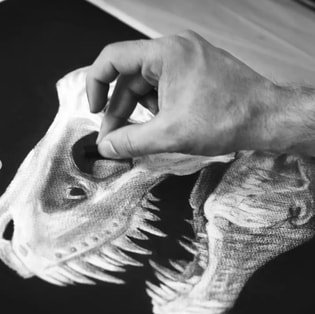
In an era where every creative choice carries environmental weight, artists are looking more carefully at the materials they use. For climate-conscious practitioners, charcoal has emerged as one of the most defensible choices available. Not just because it is natural or ancient, but because of what it actually does to carbon. What makes charcoal a sustainable art material Charcoal is produced by burning organic material in a low-oxygen environment. The result is a carbon-rich residue that, once made, is chemically stable. Unlike many synthetic pigments or petroleum-derived media, charcoal does not off-gas, does not degrade into microplastics, and does not require industrial processing to produce. For artists working on paper or canvas, it is also one of the most forgiving and expressive media available. It responds to pressure, blends intuitively, and produces a tonal range that rivals graphite without the metallic sheen. Generations of masters used it as a primary drawing tool. Today, its sustainability credentials give it a second layer of relevance. Biochar: the next step beyond charcoal Biochar takes the sustainability of charcoal significantly further. While conventional charcoal is primarily valued for its surface properties as a drawing medium, biochar is produced specifically to maximize carbon stability. Through a process called pyrolysis, agricultural waste is converted into a highly porous, carbon-dense material that can remain stable in the environment for hundreds to thousands of years. This stability is the key difference. A piece of wood stores carbon only as long as it avoids burning or decomposing. Biochar, once created, is resistant to both. When it is embedded in an artwork and sealed with fixative, the carbon it contains is effectively removed from the carbon cycle for the lifetime of the piece. Carbon sequestration embedded in the artwork itself At The Carbon Art, sustainability is not a theme applied to drawings from the outside. It is built into the DNA of the material. Every work in the collection uses charcoal and biochar as primary media, meaning the carbon in those materials is sequestered inside the artwork permanently. This is a verifiable, physical act of carbon storage. It is not an offset, not a pledge, and not a donation. It is chemistry embedded in fine art. How collectors are responding to carbon-storing art materials The shift in collector behavior over the past five years has been notable. Private buyers and corporate sustainability officers alike are asking harder questions about what they purchase and what it represents. Art that uses carbon-storing materials answers those questions in a way that no certificate or donation can replicate: the evidence is in the piece itself. Corporate collectors have used biochar artworks in their ESG reporting. Private collectors describe them as the most meaningful objects in their homes. The material choice is not incidental. It is the point. Charcoal and biochar in practice For artists considering a move toward more sustainable media, charcoal and biochar are accessible starting points. Charcoal sticks are widely available and work on most drawing surfaces. Biochar requires a little more preparation to use as a fine art medium but rewards that effort with a depth of mark and a stability that synthetic alternatives cannot match. For collectors, the choice of an artwork made from these materials is a simple one: beauty with a purpose that does not expire. To explore works made entirely from carbon-sequestering charcoal and biochar, visit the full collection at The Carbon Art.
The Charcoal Artist Raising Climate Change Awareness — Meet Abhi
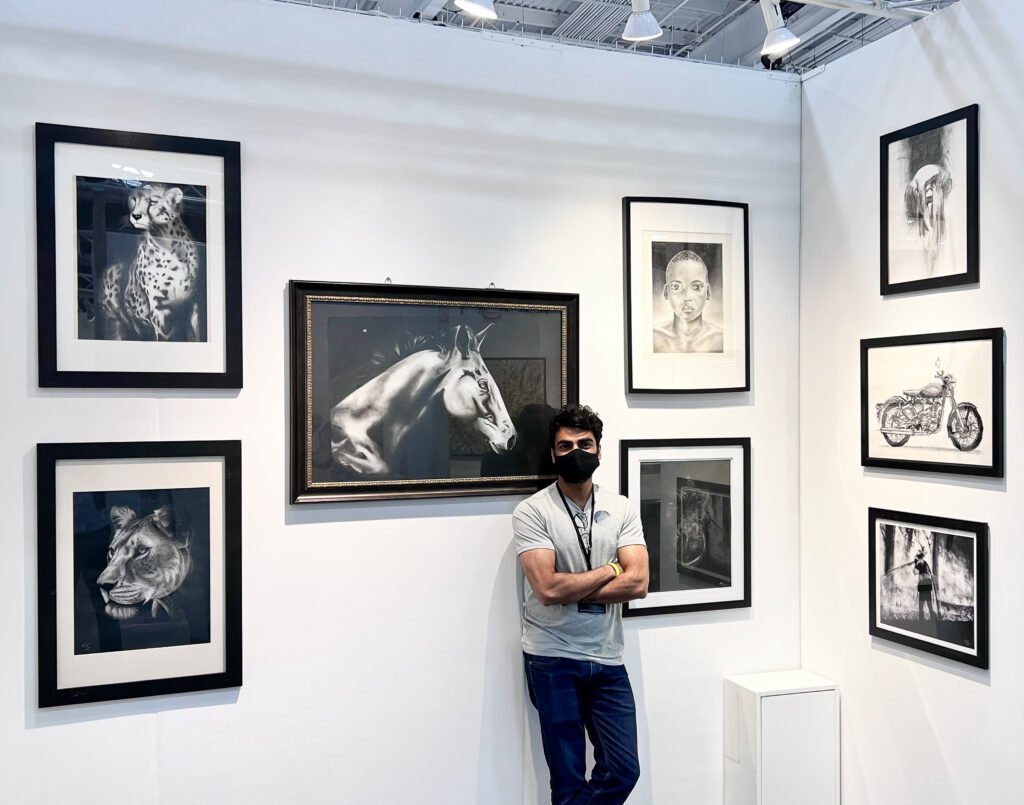
Abhijeet Shrivastava, known professionally as Abhi, is a White House-recognized urban designer and climate change artist whose charcoal and biochar artworks have been exhibited in more than 30 galleries worldwide. His practice sits at a rare intersection: rigorous climate science and serious fine art. He is known for his unique focus on climate change and sustainability, which is reflected directly in his materials. The medium he uses to convey this message is charcoal and biochar, both carbon-rich materials that permanently store atmospheric carbon within the artwork itself. Why charcoal became the medium of choice Charcoal is one of humanity’s oldest drawing tools. But for Abhi, it carries a deeper significance. Charcoal is carbon. When it is used to make art and fixed properly to a surface, that carbon is no longer in the atmosphere. It is locked inside the piece on your wall. Biochar takes this further. Produced through a process called pyrolysis, biochar is an exceptionally stable form of carbon that can remain sequestered for hundreds of years. Mixed with charcoal, it becomes both the medium and the message: a material that stores the very element at the center of our climate crisis. Climate change as the subject and the substance Most artists who engage with climate change do so representationally. They paint melting ice, draw dying ecosystems, photograph industrial pollution. Abhi does this too. But he goes a step further: the materials themselves participate in climate action. Each artwork from The Carbon Art is made with biochar and charcoal that has been sourced specifically for its carbon content. When a collector acquires a piece, they are not just buying a representation of climate concern. They are buying a verified act of carbon sequestration. Recognition and exhibitions Abhi’s work has been recognized by the White House for its contribution to climate awareness through art. He holds a degree from Columbia University’s Graduate School of Architecture, Planning and Preservation (GSAPP), and his work as a sustainability strategist has included advisory roles with Fortune 500 institutions on climate resilience and sustainable AI infrastructure. His artworks have been exhibited across more than 30 international exhibitions, reaching collectors and institutions across the United States, Europe, and Asia. The Carbon Art — where the work lives The Carbon Art is the artist’s primary platform for sharing and selling limited edition works. Each piece in the collection is available in a maximum edition of 15 and ships with a Certificate of Impact documenting the environmental contribution of that specific piece. Works span several themes: climate change and industrial impact, wildlife and biodiversity, cultural identity, and human resilience. Every piece shares a common foundation: charcoal and biochar applied with the intention of making something both beautiful and purposeful. If you are interested in the work, the full collection is available at thecarbonart.com. Corporate and private collector inquiries are welcome through the inquiry page.